
A Practical Guide for Manufacturers, OEMs, CNC Machining Companies & Engineering Buyers

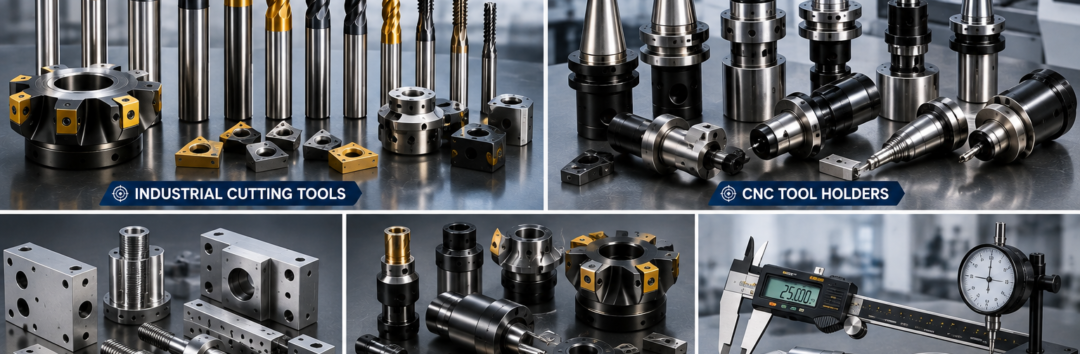
Choosing the right industrial cutting tools, CNC tool holders and precision engineering products can have a direct impact on machining performance, production consistency and overall manufacturing efficiency.

However, selecting industrial products is not simply about choosing a recognized brand or finding the lowest quotation.

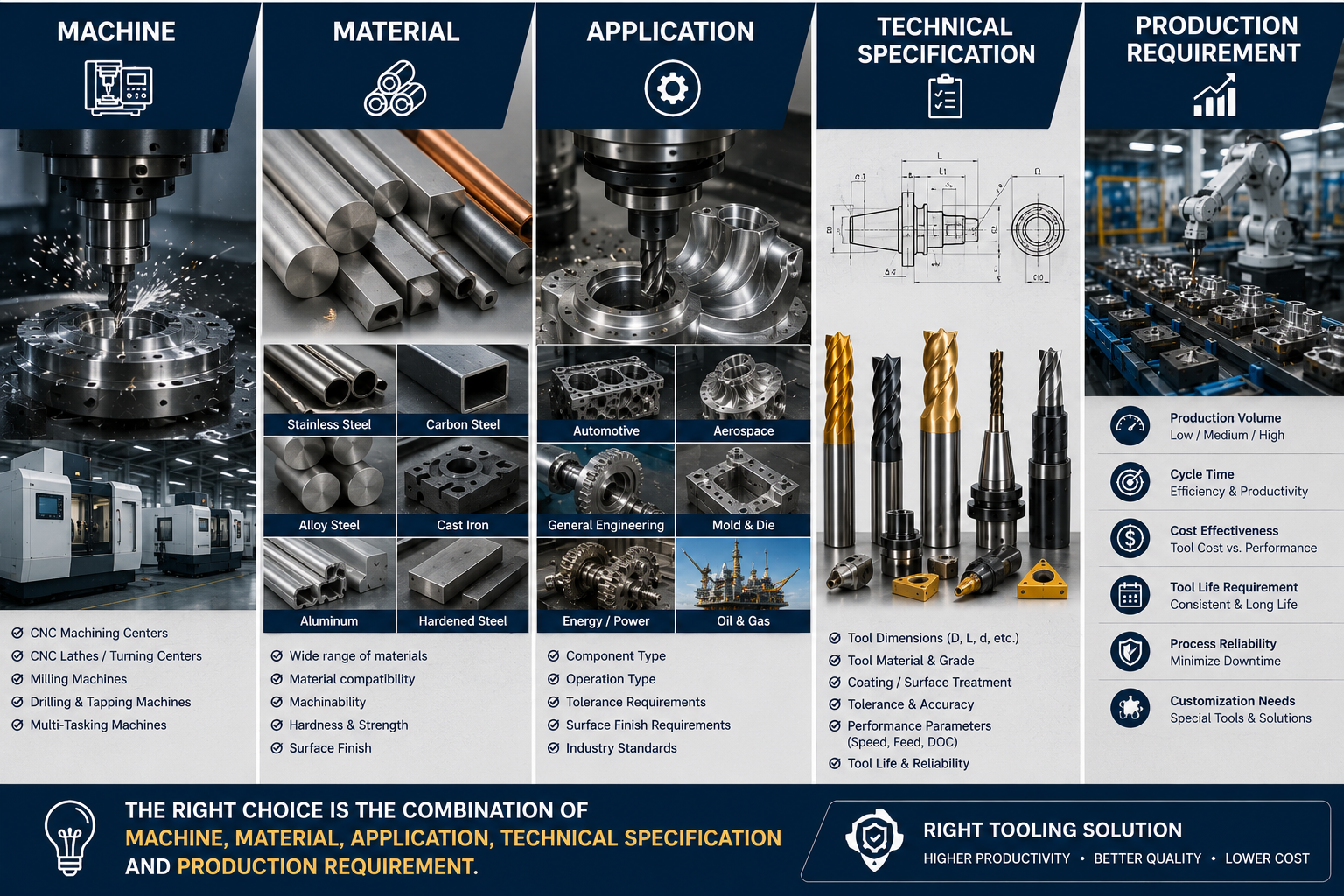
The correct product needs to match the machine, material, application, technical specification and production requirement.

At the same time, the dealer or supplier you purchase from plays an important role in helping you identify the right product, understand specifications, source the required item and support your procurement requirements.

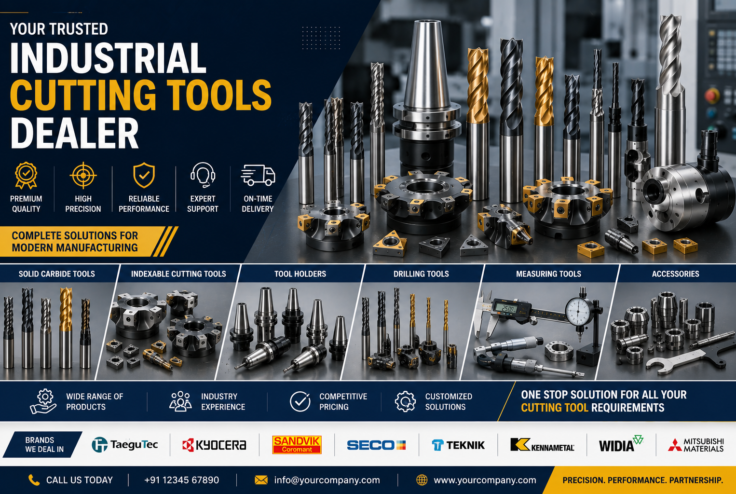
For manufacturers and engineering companies, choosing a reliable industrial cutting tools dealer can therefore be just as important as choosing the product itself.

This guide explains the key factors to consider when selecting industrial cutting tools, CNC tool holders and precision engineering products.

ChatGPT Image Aug 12, 2026, 12_07_55 PM

Why Choosing the Right Industrial Products Matters


The Product You Purchase Can Affect the Entire Manufacturing Process

Industrial engineering products may look like individual components, but their performance can influence multiple stages of production.

For example:

Cutting tools → affect machining operations

Tool holders → support tool positioning and stability

Metrology equipment → supports measurement and quality inspection

Automation systems → support process efficiency and traceability

Fasteners and washers → support reliable mechanical assemblies

Abrasives → support cutting, grinding and finishing operations

This means businesses should evaluate products based on their application and total value, rather than focusing only on purchase price.

Start With the Requirement, Not the Brand

1. Understand Your Application Before Choosing a Product

This information gives the supplier a better understanding of what product is actually required.

Match the Tool to the Machining Operation

2. Choosing the Right Industrial Cutting Tools

Industrial cutting tools are available in different designs, materials, geometries and configurations.

The Value Solutions 2026 profile features a cutting-tool portfolio that includes:

Each category serves a different purpose.


Understanding Cutting Tool Material

3. HSS vs Carbide Cutting Tools

The Value Solutions product profile includes both HSS and carbide cutting tools.Choosing between tool materials should depend on the application rather than simply selecting whichever material appears more advanced.Consider:

A professional industrial cutting tools dealer should be able to discuss these factors before recommending a product.

Material Removal, Deburring & Shaping

4. Consider Carbide Rotary Burrs for Finishing Applications

Carbide rotary burrs can be useful for applications involving controlled material removal and finishing.

Potential applications include:

A Cutting Tool Needs the Right Tool Holding System

5. Choosing the Right CNC Tool Holder

One of the most overlooked aspects of CNC machining is tool holding.Even an appropriate cutting tool may not perform as expected if the tool holding system is unsuitable for the application.The Value Solutions 2026 profile features KTA spindle tooling and tool-holding solutions, including:

Reliable Tool Holding for General CNC Applications

6. Mechanical Tool Holders

Mechanical tool holders provide a conventional approach to tool clamping and holding.

When selecting a mechanical tool holder, consider:

Precision Tool Holding for Demanding Applications

7. Hydraulic Tool Holders

Hydraulic tool holders use hydraulic clamping principles to secure cutting tools.When evaluating a hydraulic tool holder, businesses should consider:

The Value Solutions portfolio specifically includes hydraulic tool holders through its KTA tooling range.

Precision Tool Holding for CNC Machining

8. Shrink-Fit Tool Holders

Shrink-fit systems are designed for applications where secure tool holding and precision are important.

When evaluating a shrink-fit system, consider:

The Value Solutions company profile includes shrink-fit tool holders and related machines in its KTA portfolio.

Supporting Stable Machining

9. Anti-Vibration Tool Holders

Vibration can affect machining stability and surface finish.Precision anti-vibration tool holders are designed for applications where vibration control is important.When selecting such a system, consider:

The Value Solutions profile includes precision anti-vibration tool holders within its tooling portfolio.

Precision Adjustment for CNC Tooling

10. Run-Out Adjustment Tool Holders

Tool runout can influence machining consistency.

Run-out adjustment holders provide a way to control and adjust tool positioning where the application requires it.

They can be particularly relevant for precision machining applications where consistent tool positioning is important.

Don't Purchase Cutting Tools in Isolation

11. Consider Tool Holding as a Complete System

A common mistake is to evaluate cutting tools separately from tool holding.Instead, consider:

Each component contributes to the overall machining process.A knowledgeable CNC tooling supplier should therefore understand the relationship between the machine, tool holder and cutting tool.

Look Beyond Cutting Tools

12. Choosing Precision Engineering Products

Modern manufacturing companies need much more than cutting tools.

The Value Solutions company profile covers a broader engineering product portfolio including:

This allows businesses to consider multiple industrial requirements through a broader procurement relationship.

Don't Ignore Quality Measurement

13. Industrial Metrology & Measuring Equipment

Manufacturing performance is not only about producing components.You also need to verify that the components meet the required specifications.The Value Solutions profile includes ZEISS measuring and metrology solutions, including:

Why This Matters

A supplier capable of supporting both machining-related products and measurement technologies can provide greater value to businesses managing integrated production and quality requirements.

Choosing Products for Smarter Manufacturing

14. Industrial Automation & Traceability

Industrial businesses are increasingly adopting automation to improve process consistency and traceability.

The Value Solutions profile includes automation solutions covering:

Applications May Include

When choosing an industrial engineering products dealer, it is valuable to consider whether the supplier understands these broader manufacturing requirements.

Trusted Product Sources Can Simplify Industrial Procurement

15. Why Brand & Dealership Relationships Matter

For industrial buyers, the supplier's relationship with the manufacturer can be an important consideration.However, businesses should distinguish between:

Why This Matters
Verify the Supplier's Actual Relationship

16. Don’t Assume Every Brand Is a Dealership

The term “authorized dealer” should not be used casually.

A company may sell a manufacturer’s products without holding an official dealership or authorization.

Therefore, before publishing or relying on a dealership claim, buyers should verify:

This is especially important when purchasing specialized or high-value engineering products.

A Good Dealer Should Add More Than a Product Catalogue

17. Evaluate the Supplier’s Technical Support

A professional industrial supplier should be able to understand your requirement and communicate relevant technical information.The Value Solutions profile highlights technical and application-related capabilities including:

This type of support can be valuable when the requirement involves more than simply purchasing a standard product.

The Lowest Price May Not Always Be the Lowest Cost

18. Consider Total Cost of Ownership

When comparing industrial products, businesses often compare only the purchase price.

A better approach is to consider the total cost associated with using the product.

Evaluate
Purchase Cost
Tool Life
Replacement Frequency
Downtime
Production Efficiency
Maintenance
Quality Impact
=
Total Value

A product with a higher initial price may sometimes provide better overall value if it is appropriate for the application and supports more efficient operations.

Build Procurement Relationship Instead of Placing One-Time

19. Consider Bulk & Recurring Requirements

Manufacturing businesses frequently require recurring quantities of:

A supplier who understands recurring requirements can potentially make procurement easier.For larger customers, provide:

This gives the supplier better visibility into your procurement requirements.

Availability Matters When Production Depends on the Product

20. Ask About Product Availability

Even the right product has limited value if it cannot be obtained when required.

Before selecting an industrial cutting tools supplier, ask about:

For recurring manufacturing requirements, discuss expected consumption and future procurement requirements with the supplier.

A Broader Engineering Product Partner

Why Value Solutions?

Cutting Tools

HSS and carbide tools, drills, end mills, reamers, taps, thread mills, dies, deburring tools and carbide rotary burrs.

CNC Tool Holding

Mechanical, hydraulic, shrink-fit, anti-vibration, polygonal and run-out adjustment tool holders.


Metrology

CMMs, 3D scanners, laser scanning, surface measurement and related quality-control systems.

Automation

Marking, traceability, machine vision, robotics, gantry robots and material handling.

Other Engineering Products

Spring lock washers, abrasives, hardware, fasteners, hydraulic/pneumatic products, electrical and tool-room products and quality instruments.The company's stated philosophy is:“Building Trust Through Value.”

8 Qualities to Look For

What Makes a Good Industrial Cutting Tools Dealer?

1. Product Knowledge

The supplier understands the products being sold.

2. Application Understanding

The supplier can discuss the intended manufacturing application.


3. Product Range

The supplier offers multiple relevant product categories.

4. Manufacturer Relationships

The supplier can clearly explain its relationship with the brands it represents.


5. Technical Support

The supplier can help customers understand specifications and available options.

6. Sourcing Capability

The supplier can evaluate requirements that are not immediately available from standard stock.


7. Reliable Communication

The supplier responds clearly and professionally.

8. Long-Term Support

The supplier is capable of supporting recurring industrial requirements.